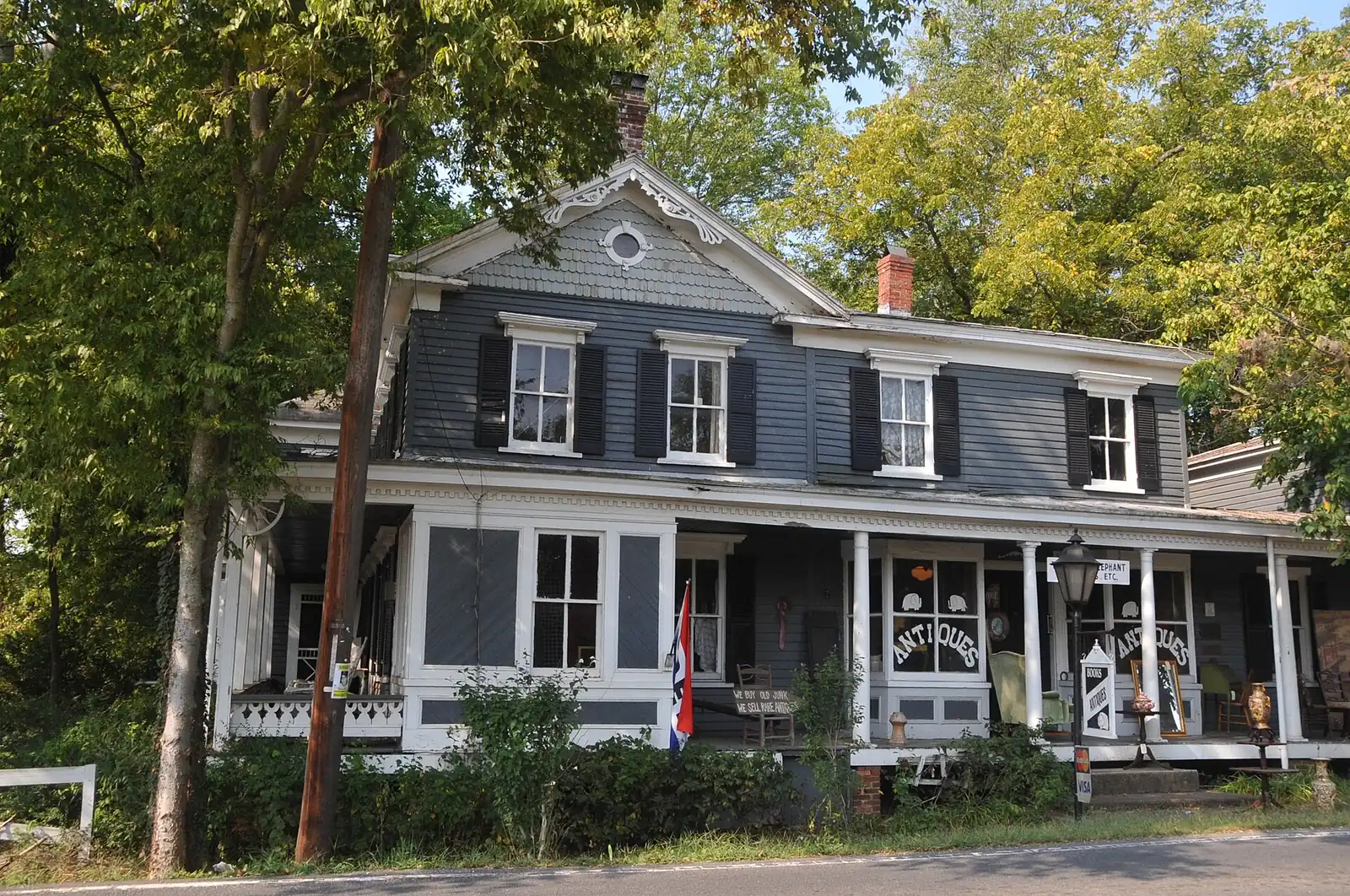
Linton Hall takes its name from the Linton family estate given to the Benedictines in 1894. Its one National Register listing: the Davis-Beard House, 1989.
Last checked Oct. 19, 2026. Sources: the Benedictine Sisters of Virginia, Prince William County Historic Preservation, the Virginia Department of Historic Resources and the National Park Service’s National Register of Historic Places data. Dates are as those sources give them.
Linton Hall was never a town. It grew up around the railroad stop at Bristoe Station and a Catholic school campus, stayed largely rural for most of its history, and then grew fast: its population more than quadrupled between the 2000 and 2010 censuses. It has no town government and no incorporation date; Prince William County’s Historic Preservation Division runs the historic sites around it.
Who to call
- Brentsville Courthouse Historic Centre and county history programs: 703-365-7895
- Bristoe Station tours and volunteers: 703-366-3049
- State register records: Virginia Department of Historic Resources
Where the name comes from
According to the Benedictine Sisters of Virginia, in 1894 Sister Mary Baptista of the Visitation order, born Sarah Eliot Linton, gave her family estate, Lintonsford, in Bristow to the Benedictine monks to open two schools for disadvantaged children, one for boys and one for girls. The monks opened St. Joseph’s. Sisters led by Mother Edith left Richmond in May 1894 and opened St. Edith’s Academy for girls that September.
Since 1901 the monastery in Bristow has been the motherhouse of the Benedictine Sisters of Virginia. In 1922 the sisters moved the girls’ school to Richmond, where it became Saint Gertrude High School, and after the monks left and St. Joseph’s closed they founded Linton Hall Military Academy for boys on the Bristow campus. Linton Hall School is still at 9535 Linton Hall Road, and the sisters’ monastery is still in Bristow.
Bristoe Station and the Civil War
The railroad stop now called Bristow was known as Bristoe Station in the 1860s. Two battles were fought there, according to the county’s Bristoe Station page:
- Battle of Kettle Run, Aug. 27, 1862. Confederate troops under Stonewall Jackson captured the railroad at Bristoe Station before taking the supply warehouses at Manassas; the battle was the first of a series known as Second Manassas.
- Battle of Bristoe Station, Oct. 14, 1863. Robert E. Lee’s attempt to repeat the 1862 campaign was defeated. The Virginia Department of Historic Resources describes it as a clear Union victory with severe Confederate losses.
Earlier, after the First Battle of Manassas, Confederate units camped around the station at a site called Camp Jones, where disease killed many soldiers. In April 1862 Union Gen. Rufus King’s division was caught in a four-day snowstorm here. Pennsylvania Reserve units set up winter quarters at Bristoe Station in November 1863.
A preserved battlefield: in 2004, Centex Homes, the Civil War Trust and Prince William County worked together to preserve 130 acres of the battlefield, and in 2025 the county added 22 acres of core battlefield land, according to the county. A Bristoe Battlefield historic district was listed on the Virginia Landmarks Register on April 17, 1991, and removed by legislative direction in 1993, according to the Department of Historic Resources.
Timeline
| Year | Event |
|---|---|
| 1686-87 | The 30,000-acre Brent Town Tract is established |
| 1737 | The 7,500-acre Bristow Tract is created from it |
| 1820 | The General Assembly establishes Brentsville as the Prince William County seat |
| 1822 | Brentsville courthouse and jail completed |
| Aug. 27, 1862 | Battle of Kettle Run |
| Oct. 14, 1863 | Battle of Bristoe Station |
| 1891 | Robert Davis adds a store to his family’s house on Bristow Road |
| 1893 | County seat moves from Brentsville to Manassas |
| 1894 | The Linton family estate, Lintonsford, is given to the Benedictines |
| 1922 | Linton Hall Military Academy opens on the Bristow campus |
| 2000 | The census counts 8,620 people in the Linton Hall census-designated place |
| 2010 | The count is 35,725 |
| 2020 | The count is 41,754 |
Sources: the county’s Bristoe Station and Brentsville pages, the Benedictine Sisters of Virginia, the Department of Historic Resources and the Census Bureau. See our population guide.
National Register of Historic Places
The National Park Service’s register data shows one listing inside Linton Hall’s census boundary:
- Davis-Beard House, 10726 Bristow Road. Listed on the Virginia Landmarks Register on Dec. 13, 1988, and the National Register on Nov. 8, 1989. The Department of Historic Resources calls it a rare surviving 19th-century combination dwelling and general store, at Bristow Road and the railroad. It stands on the brownstone foundations of a house Thomas Davis built around 1856, apparently destroyed in the 1863 battle. Robert Davis added the store in 1891. It is a private property; view it from the road.
Just outside Linton Hall, on Bristow Road in Brentsville, the Brentsville Courthouse and Jail was listed on the National Register in August 1989, and the White House at 12320 Bristow Road in October 1989, according to the same data.
Places to visit
- Bristoe Station Battlefield Heritage Park, parking on Iron Brigade Unit Avenue off Bristow Road. Grounds open daily, dawn to dusk; free guided tours at 11 a.m., 1 p.m. and 3 p.m. on the second and fourth weekends from May through October. More than 2.7 miles of trails with interpretive stations and historical markers. See our parks guide.
- Brentsville Courthouse Historic Centre, 12229 Bristow Road. Self-guided tours Friday to Monday, 10 a.m. to 4 p.m., with guided tours at 11 a.m. and 2 p.m.; grounds open dawn to dusk. The 28-acre site has five historic buildings: the 1822 courthouse, the 1822 jail, an 1880 church, an 1850 farmhouse and a one-room schoolhouse used from 1929 to 1944, according to the county. Phone: 703-365-7895.
Related guides
Frequently asked questions
How did Linton Hall, Virginia, get its name?
The name traces to the Linton family. In 1894 Sarah Eliot Linton, by then Sister Mary Baptista of the Visitation order, gave her family estate, Lintonsford, in Bristow to the Benedictines to open schools. Linton Hall Military Academy later opened there, and the school is still on Linton Hall Road.
When was Linton Hall founded or incorporated?
It was never incorporated. Linton Hall is an unincorporated census-designated place in Prince William County; the Census Bureau first reported a population for it in 2000, when it had 8,620 residents.
What Civil War battles were fought near Linton Hall?
The Battle of Kettle Run on Aug. 27, 1862, and the Battle of Bristoe Station on Oct. 14, 1863, both at today’s Bristoe Station Battlefield Heritage Park on Bristow Road.
Are there National Register of Historic Places sites in Linton Hall?
One, according to the National Park Service’s register data: the Davis-Beard House at 10726 Bristow Road, listed on the National Register on Nov. 8, 1989.
Have your say